Shop the researched models
These Amazon links are affiliate links. Daily Carry Lab may earn a commission from qualifying purchases. Match the model and included contents to your needs; this guide is based on manufacturer-source research, without hands-on testing.
-
Lezyne Micro Drive 800+ (USB-C)
Check Lezyne Micro Drive 800+ (USB-C) on Amazon -
Fenix BC15R
Check Fenix BC15R on Amazon
By Daily Carry Lab. Primary documentation checked October 14, 2026 (Pacific).
Affiliate disclosure: As an Amazon Associate, Daily Carry Lab earns from qualifying purchases. Retailer links may earn a commission at no extra cost to you.
Research disclosure: We have not tested these products. Selection uses primary documentation and the compatibility decisions below; no DCL ratings or measured performance are claimed.
Choose a bicycle front light around the mode you will actually use, the handlebar mount and the charging routine. The highest lumen setting and longest runtime normally describe different modes; combining them creates a performance claim the manufacturer did not make.
We selected Lezyne Micro Drive 800+ Front, black satin 1-LED-2-V637, and Fenix BC15R for documented USB-C charging and distinct published beam/mode choices. These are front lights. They do not replace the separate rear light, reflectors or other equipment your route requires. We have not tested beam coverage, mount movement, battery endurance or visibility to traffic.
Compare rated modes, not just the headline
| Exact front light | Selected steady modes: maker-rated output and runtime | Charging and mass | Main drawback |
|---|---|---|---|
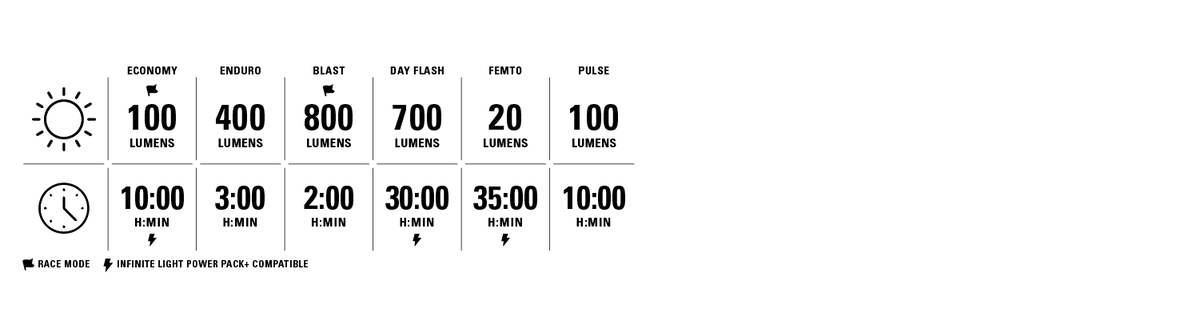
| Lezyne Micro Drive 800+ | Economy 100lm / 10h; Enduro 400lm / 3h; Blast 800lm / 2h | USB-C; cable not included; listed 135g | Longest 35h figure belongs to 20lm Femto mode |
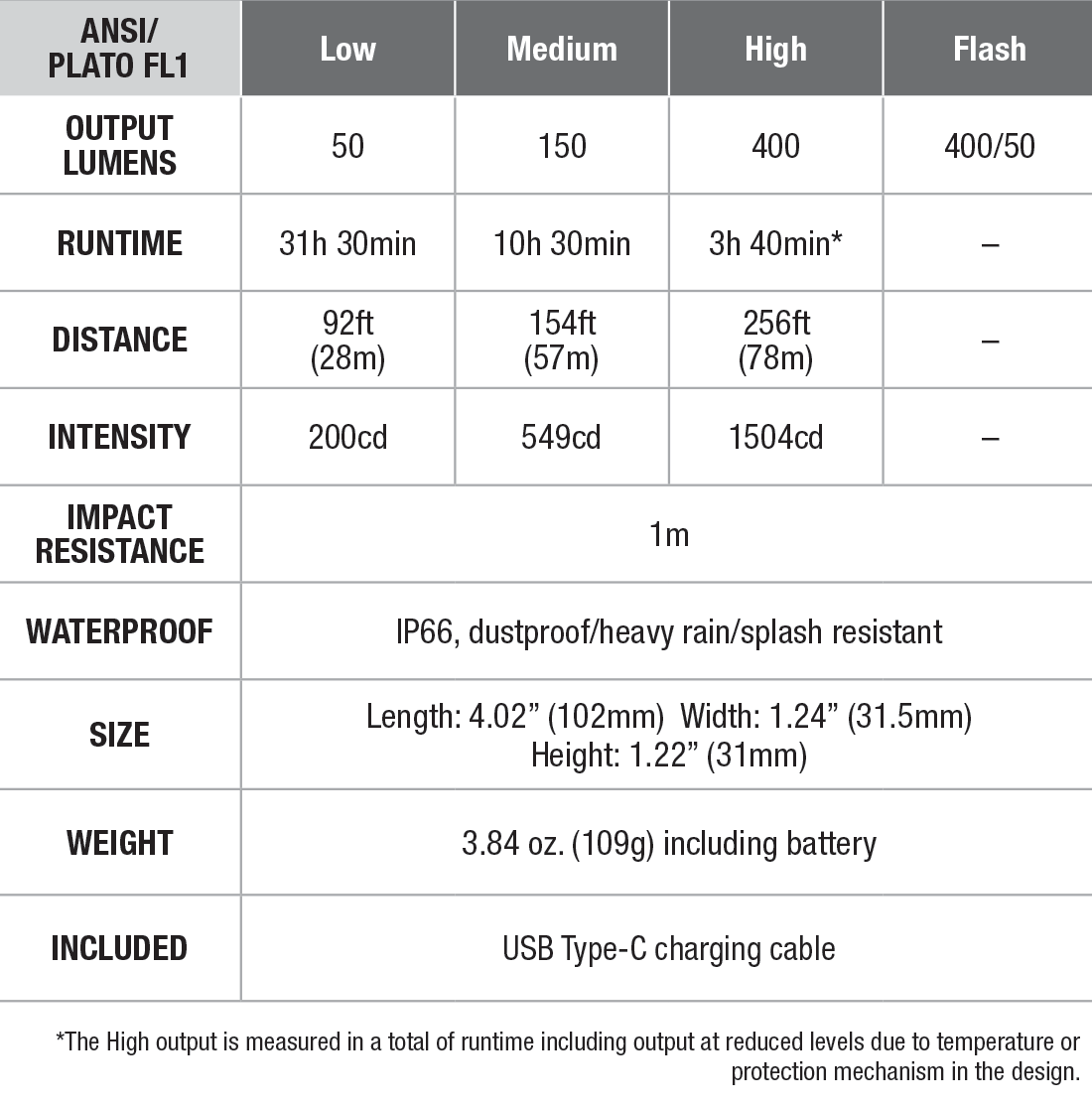
| Fenix BC15R | Low 50lm / 31h30m; Medium 150lm / 10h30m; High 400lm / 3h40m | USB-C; cable included; listed 109g including battery | High-mode runtime includes reduced output from protection controls |
Sources: Lezyne’s product and mode chart and Fenix’s BC15R specification chart and instructions, checked October 14, 2026. These are manufacturer ratings, not measured DCL results. Their different test conditions and beam patterns prevent us declaring a runtime winner from this table.
Lezyne also rates Day Flash at 700lm / 30h and Pulse at 100lm / 10h. Those intermittent modes are not a promise of continuous road illumination. We make no claim that a specific flash pattern is permitted in your location. Choose a documented steady mode when you need continuous light and confirm local equipment/mounting requirements.
Lezyne Micro Drive 800+: more selectable output
The six-mode 800+ model has a strap-style handlebar mount, an aluminum body and USB-C charging. Its higher listed maximum provides an additional setting to consider, but lumen output alone does not establish usable distance, road coverage or glare control. A 35h maximum-runtime headline cannot be paired with the 800lm maximum.
The maker lists compatibility with Infinite Light Power Pack+, while excluding the original Infinite Light Power Pack. Treat that suffix as a real accessory distinction. An optional GoPro-style mount is separately sold; do not assume the light includes it or fits every cockpit bracket. The selected black satin SKU is 1-LED-2-V637, not an older Micro Drive with a different charger or output.
Drawback: a charge cable and any alternate mount add to the purchase plan. Check the strap on the actual bar shape and leave access to the charging port; we have not established a universal bar-fit envelope or measured strap grip.
Fenix BC15R: a documented cut-off beam design
Fenix describes an anti-glare cut-off facula line. That is a manufacturer design description, not DCL proof of glare elimination or certification for a particular road standard. Aim and mount it according to the instructions, and recheck alignment after handling or a rough ride.
The BC15R uses a built-in 2600mAh battery and a quick-release mount. The manufacturer’s BC15R instructions say the battery is not replaceable and charging uses the light’s USB Type-C port. Follow the specified charger instructions; do not infer that a larger USB-C supply charges it faster. Fenix’s high-mode footnote explicitly includes time at reduced output due to temperature or protective mechanisms.
Drawback: the internal battery cannot simply be swapped for a spare cell. Plan charging access and a separate contingency for a longer or delayed ride. The 31h30m low-mode rating does not promise that 50lm is enough for your route or speed.
Compatibility checks before the first commute
| Check | What to resolve on the bicycle | Limit of this research |
|---|---|---|
| Mount location | Bar shape, cables and unobstructed beam | No universal fit or vibration test |
| Beam aim | Maker’s mounting position and angle | No local road-standard approval inferred |
| Mode and return journey | Rated steady mode plus a reserve plan | Cold, age and conditions can alter runtime |
| Charging | Port access, specified supply and cable | USB-C alone does not establish charge rate |
| Rain exposure | Maker’s sealing/port-cover instructions | Published ingress rating is not a DCL weather test |
Lezyne lists IPX7 and Fenix lists IP66. Those are different ingress claims, not a durability ranking; follow each maker’s care instructions and avoid charging with a wet connector. Neither claim establishes road-standard compliance.
Budget for a complete mounting and charging setup
| Plan | Costs to include; current totals unknown | Main compromise |
|---|---|---|
| Micro Drive 800+ on included mount | Light, USB-C cable and suitable supply | Verify strap fit and charging access |
| BC15R on its mount | Light and suitable supply; listed cable included | Internal battery and exact mount fit |
| Alternative cockpit mount | Exact compatible mount in addition to light | Added parts and compatibility checks |
| Longer commute contingency | Separate backup and charging plan | More weight and maintenance |
No price-band, cheapest-product or safety ranking is supported. The EDC flashlight guide covers handheld lights; it does not establish that a flashlight has the beam, mount or permitted configuration for a bicycle. For these two front lights, choose a documented steady mode and a mount that fits before treating the peak lumen figure as decisive.
Sources and limits
This guide compares published specifications and source documentation. Daily Carry Lab has not performed hands-on tests of the products in this guide. Consult the dated sources and verify the exact model and current terms before buying.
Related guides
Camera backpacks for travel: dividers, access and laptop fit
Compare Peak Design Everyday Backpack 20L v2 and Lowepro ProTactic BP 350 AW III by camera access, laptop clearance, weight and packed dimensions.
Travel dash cams: recording, storage and parked-power requirements
Compare VIOFO A119 Mini 2 and Garmin Mini 3 by exact recording specifications, memory cards, GPS limits and the extra requirements for parked use.
Kids travel headphones: wired Junior 320 or Bluetooth 320BT?
Compare exact JBL Junior 320 and 320BT models for aircraft jacks, Bluetooth tablets, app settings and charging. Manufacturer claims, not health testing.
MagSafe wallets: compare card capacity, Find My and stand functions
Compare Apple FineWoven Black and ESR Geo 2K657 by documented card capacity, Find My behaviour, magnetic claims and stand requirements.