Best Overall

SanDisk Extreme V2 1TB
Amazon's #1 best seller in external SSDs. 1050MB/s reads, IP65 water/dust resistance, carabiner loop. 88,000+ ratings prove its reliability.
We tested the top portable SSDs for everyday carry and travel. From ultra-fast USB4 drives to rugged IP65-rated options, these compact SSDs keep your files safe on the go.
Best Overall
Amazon's #1 best seller in external SSDs. 1050MB/s reads, IP65 water/dust resistance, carabiner loop. 88,000+ ratings prove its reliability.
Best Budget

Credit-card sized, 1050MB/s speeds, AES 256-bit hardware encryption. 37,000+ ratings and Samsung's 3-year warranty.
Best Compact

IP65 dust/water resistant, 3-meter drop tested, rubber exterior. Same 1050MB/s speed as the T7 in an adventure-proof shell.
Best for Laptop

1050MB/s reads, IP55 water/dust resistance, hardware encryption. Wirecutter and PCMag recommended at a price that undercuts the competition.
Best for Travel

Up to 4000MB/s via USB4. IP55 rated, plug-and-play on PC, Mac, and iPad. The fastest portable SSD under $300.
Comparison table
SanDisk Extreme V2 1TB
Best overall portable SSD
Amazon's #1 best seller in external SSDs. 1050MB/s reads, IP65 water/dust resistance, carabiner loop. 88,000+ ratings prove its reliability.
Samsung T7 1TB
Best for reliability and brand trust
Credit-card sized, 1050MB/s speeds, AES 256-bit hardware encryption. 37,000+ ratings and Samsung's 3-year warranty.
Samsung T7 Shield 1TB
Best rugged SSD for outdoor carry
IP65 dust/water resistant, 3-meter drop tested, rubber exterior. Same 1050MB/s speed as the T7 in an adventure-proof shell.
Crucial X9 Pro 1TB
Best budget portable SSD
1050MB/s reads, IP55 water/dust resistance, hardware encryption. Wirecutter and PCMag recommended at a price that undercuts the competition.
Corsair EX400U 1TB
Best USB4 speed demon
Up to 4000MB/s via USB4. IP55 rated, plug-and-play on PC, Mac, and iPad. The fastest portable SSD under $300.
SanDisk Creator Pro 1TB
Best for content creators
2000MB/s via USB 3.2 Gen 2x2, IP65 rated. Includes 1 month of Adobe Creative Cloud. Built for video editors and photographers.
SK Hynix Beetle X31 1TB
Best ultra-compact EDC SSD
Unique beetle-shaped design with DRAM cache for sustained performance. 1050MB/s, keychain-friendly size. A sleeper pick.
| Product | Best For | Key Note | Rating | Price | Check Price |
|---|---|---|---|---|---|
| SanDisk Extreme V2 1TB | Best overall portable SSD | Amazon's #1 best seller in external SSDs. 1050MB/s reads, IP65 water/dust resistance, carabiner loop. 88,000+ ratings prove its reliability. | $162 | Check Price | |
| Samsung T7 1TB | Best for reliability and brand trust | Credit-card sized, 1050MB/s speeds, AES 256-bit hardware encryption. 37,000+ ratings and Samsung's 3-year warranty. | $275 | Check Price | |
| Samsung T7 Shield 1TB | Best rugged SSD for outdoor carry | IP65 dust/water resistant, 3-meter drop tested, rubber exterior. Same 1050MB/s speed as the T7 in an adventure-proof shell. | $288 | Check Price | |
| Crucial X9 Pro 1TB | Best budget portable SSD | 1050MB/s reads, IP55 water/dust resistance, hardware encryption. Wirecutter and PCMag recommended at a price that undercuts the competition. | $120 | Check Price | |
| Corsair EX400U 1TB | Best USB4 speed demon | Up to 4000MB/s via USB4. IP55 rated, plug-and-play on PC, Mac, and iPad. The fastest portable SSD under $300. | $265 | Check Price | |
| SanDisk Creator Pro 1TB | Best for content creators | 2000MB/s via USB 3.2 Gen 2x2, IP65 rated. Includes 1 month of Adobe Creative Cloud. Built for video editors and photographers. | $230 | Check Price | |
| SK Hynix Beetle X31 1TB | Best ultra-compact EDC SSD | Unique beetle-shaped design with DRAM cache for sustained performance. 1050MB/s, keychain-friendly size. A sleeper pick. | $100 | Check Price |
Portable SSDs have become essential EDC gear. Whether you are backing up photos from a shoot, carrying project files between offices, or keeping a bootable clone of your operating system for emergencies, a pocket-sized SSD does the job that cloud storage cannot — instantly, offline, and without monthly fees. The best portable SSDs in 2026 deliver speeds that saturate a USB-C connection, shrug off drops and splashes, and weigh less than a deck of cards.
This guide covers the seven best portable SSDs for everyday carry and travel. We focused on 1TB models because that capacity hits the price-to-storage sweet spot for most people. It is enough to hold a full laptop backup, thousands of RAW photos, or hours of 4K video — without crossing the $300 line for most picks.
The short version: The SanDisk Extreme V2 is the default recommendation for most people — proven, fast, rugged, and reasonably priced with nearly 90,000 Amazon reviews behind it. If budget is king, the Crucial X9 Pro delivers near-identical speeds for about $120. And if you need maximum transfer speeds for video editing, the Corsair EX400U with USB4 hits 4000MB/s.
Cloud storage works great — until you are on a plane, in a national park, or dealing with hotel Wi-Fi that tops out at 5 Mbps. A portable SSD gives you:
For content creators, videographers, and photographers especially, a portable SSD is not optional. It is the fastest way to offload footage on location and the safest way to carry an archive between edit suites.
We evaluated portable SSDs across five criteria that matter for EDC and travel:
Every drive on this list uses USB-C, works across Mac, Windows, and most tablets, and weighs under 100 grams.
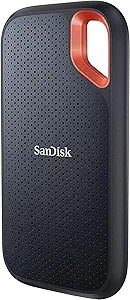
There is a reason the SanDisk Extreme V2 is Amazon’s number-one best seller in external SSDs. It delivers 1050MB/s reads and 1000MB/s writes over USB 3.2 Gen 2 — fast enough to edit video directly from the drive. The IP65 rating means it survives dust storms and rain. The built-in carabiner loop clips to a bag or belt loop. And with nearly 90,000 ratings averaging 4.6 stars, its reliability is not theoretical.
The rubberized exterior absorbs drops without cracking. It works out of the box on Mac, PC, Android, and iPad. The included USB-C to USB-C and USB-C to USB-A cables mean you are covered regardless of what ports your machine has.
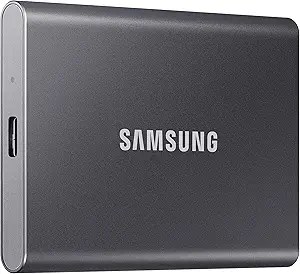
Samsung’s T7 has been the gold standard in portable SSDs since 2020, and the latest revision keeps it there. The drive is barely larger than a credit card and weighs 58 grams — you genuinely forget it is in your pocket. Speeds hit 1050MB/s over USB 3.2 Gen 2, and the built-in AES 256-bit hardware encryption means your data stays locked even if the drive gets lost.
Samsung’s Portable SSD software lets you set a password and manage the drive across platforms. The aluminum casing is sleek and conducts heat well, keeping thermals in check during long transfers. With 37,000+ ratings at 4.7 stars, this is the drive professionals trust.
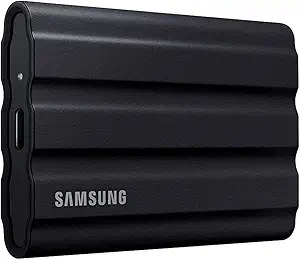
The T7 Shield takes everything great about the Samsung T7 and wraps it in a rubber armor shell rated IP65 for water and dust. It is tested to survive drops from 3 meters onto a hard floor. If your EDC involves hiking, jobsites, or anything where gear takes a beating, this is the SSD to carry.
Speed is identical to the standard T7 at 1050MB/s. The larger rubber body is still pocket-friendly at 98 grams. It works with Mac, PC, Android, gaming consoles, and USB-C iPads out of the box. Samsung backs it with the same 3-year warranty.
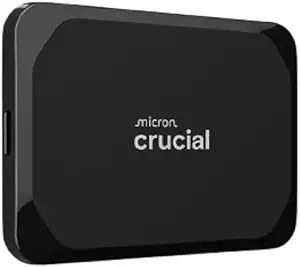
The Crucial X9 Pro is the drive that makes everything else on this list look expensive. At around $120, it delivers 1050MB/s reads, IP55 water and dust resistance, hardware-based AES 256-bit encryption, and a compact anodized aluminum body. PCMag gave it an Editors’ Choice award. Wirecutter recommends it. It is the best value in portable SSDs right now, full stop.
Micron (Crucial’s parent company) backs it with a limited 5-year warranty — longer than Samsung or SanDisk. The drive works with Mac, PC, Chromebook, iPad, Android, and gaming consoles. For EDC, the small footprint and metal build feel premium despite the budget price.
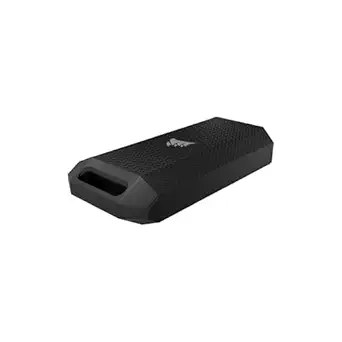
If you have a USB4 or Thunderbolt port and need maximum speed, the Corsair EX400U is the drive to get. It hits 4000MB/s reads — nearly four times faster than every other drive on this list. That means transferring a 100GB video project in about 25 seconds instead of two minutes.
The EX400U uses a USB4 interface that is backward compatible with USB 3.2 and Thunderbolt 3/4. The IP55 rating handles splashes and dust. At 4.9 stars from early adopters, the reception has been exceptional. The trade-off is price — $265 is steep — but for video editors, photographers, or anyone moving massive files daily, the time savings pay for themselves.
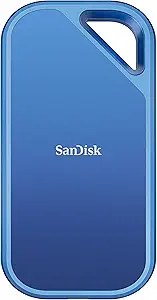
SanDisk built the Creator Pro specifically for content creators who need fast, reliable storage on location. It delivers 2000MB/s reads and writes via USB 3.2 Gen 2x2 — twice the speed of the standard Extreme. The IP65 rating means it shrugs off rain and dust on outdoor shoots. And it includes one month of Adobe Creative Cloud, which is a nice touch if you are already in that ecosystem.
The 2x2 interface is the key differentiator here. Most USB 3.2 Gen 2 drives max out at 1050MB/s. The Creator Pro doubles that, which matters when you are ingesting hours of 4K or 8K footage. At $230, it sits between the budget picks and the USB4 premium tier — a solid middle ground for working creators.
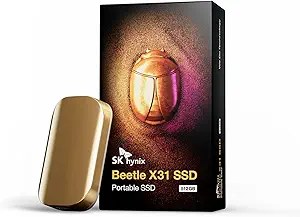
The Beetle X31 is the sleeper pick on this list. SK Hynix — the company that makes memory chips for Apple, Nvidia, and half the tech industry — designed a portable SSD that looks like nothing else on the market. The rounded beetle-shaped body is genuinely pocket-friendly. The built-in DRAM cache delivers consistent speeds even during sustained writes, which cheaper drives struggle with.
At around $100 for 1TB, it undercuts even the Crucial X9 Pro. Speeds hit 1050MB/s over USB 3.2 Gen 2. The unique form factor with its keychain-friendly size makes it ideal for EDC purists who want storage that disappears into their carry. With 1,600+ ratings at 4.7 stars, it has quietly built a loyal following.
| SSD | Speed | Durability | Price | Rating | Best For |
|---|---|---|---|---|---|
| SanDisk Extreme V2 | 1050 MB/s | IP65 | ~$162 | 4.6★ | Best overall |
| Samsung T7 | 1050 MB/s | No IP | ~$275 | 4.7★ | Reliability |
| Samsung T7 Shield | 1050 MB/s | IP65, 3m drop | ~$288 | 4.7★ | Rugged carry |
| Crucial X9 Pro | 1050 MB/s | IP55 | ~$120 | 4.6★ | Budget pick |
| Corsair EX400U | 4000 MB/s | IP55 | ~$265 | 4.9★ | Maximum speed |
| SanDisk Creator Pro | 2000 MB/s | IP65 | ~$230 | 4.8★ | Content creators |
| SK Hynix Beetle X31 | 1050 MB/s | No IP | ~$100 | 4.7★ | Ultra-compact |
Most portable SSDs use USB 3.2 Gen 2, which tops out at 10 Gbps — about 1050MB/s in practice. That is fast enough for most people. Transferring a 50GB project takes under a minute.
USB4 drives like the Corsair EX400U can hit 40 Gbps (4000MB/s), but you need a USB4 or Thunderbolt 3/4 port on your computer to reach those speeds. If you plug a USB4 drive into a regular USB-C port, it falls back to USB 3.2 speeds. So the upgrade only matters if your machine supports it.
Our advice: If you edit video professionally or regularly move files over 50GB, USB4 is worth the premium. For everyone else, USB 3.2 Gen 2 drives offer the best balance of speed, price, and compatibility.
You will see IP55 and IP65 ratings on many of these drives. Here is what they mean:
For EDC, IP55 is the minimum we recommend. IP65 is better if your gear lives in a backpack that sees weather. If you are strictly desk-to-desk, any drive on this list works.
1TB is the sweet spot for most people. It holds roughly 250,000 photos, 500 hours of music, or 50 hours of 4K video. The price premium over 500GB is modest, and you avoid running out of space. If you are a videographer working with 4K/8K footage, consider 2TB.
Yes — if you have an iPhone 15 or later with USB-C. All drives on this list work with iOS via the Files app. Older Lightning iPhones need an adapter, which we do not recommend due to speed limitations.
Modern SSDs are rated for years of daily use. Most come with 3-5 year warranties. They have no moving parts, so they outlast traditional hard drives significantly. The main enemy is heat — avoid leaving your SSD in a hot car.
Most drives ship formatted as exFAT, which works on both Mac and Windows out of the box. If you only use Mac, reformatting to APFS gives slightly better performance. If you share the drive between Mac and PC, stick with exFAT.
Yes, significantly. A portable SSD is 5-20x faster than a typical USB flash drive, more durable, and available in much larger capacities. The price gap has narrowed enough that there is little reason to buy a flash drive over 128GB when an SSD costs only slightly more.
Daily Carry Lab earns a commission on qualifying purchases through our Amazon affiliate links. This does not affect our recommendations — we only feature products we would carry ourselves.
Best overall portable SSD
Amazon's #1 best seller in external SSDs. 1050MB/s reads, IP65 water/dust resistance, carabiner loop. 88,000+ ratings prove its reliability.
Best for reliability and brand trust
Credit-card sized, 1050MB/s speeds, AES 256-bit hardware encryption. 37,000+ ratings and Samsung's 3-year warranty.
Best rugged SSD for outdoor carry
IP65 dust/water resistant, 3-meter drop tested, rubber exterior. Same 1050MB/s speed as the T7 in an adventure-proof shell.
Best budget portable SSD
1050MB/s reads, IP55 water/dust resistance, hardware encryption. Wirecutter and PCMag recommended at a price that undercuts the competition.
Best USB4 speed demon
Up to 4000MB/s via USB4. IP55 rated, plug-and-play on PC, Mac, and iPad. The fastest portable SSD under $300.

Best for content creators
2000MB/s via USB 3.2 Gen 2x2, IP65 rated. Includes 1 month of Adobe Creative Cloud. Built for video editors and photographers.

Best ultra-compact EDC SSD
Unique beetle-shaped design with DRAM cache for sustained performance. 1050MB/s, keychain-friendly size. A sleeper pick.
Amazon's #1 best seller in external SSDs. 1050MB/s reads, IP65 water/dust resistance, carabiner loop. 88,000+ ratings prove its reliability.
Check Price on AmazonTravel Gear
The best USB-C car chargers for fast charging your phone, tablet, and laptop on the road. We picked the top-rated options from Anker, Belkin, UGREEN, and more.
Travel Gear
Passport Tech Wallets vs Sling Bag Tech Kits: Which Should You Carry: practical carry guidance on fit, real-world tradeoffs, and the specs worth comparing before you buy.
Travel Gear
Travel Gear Essentials for Rainy Terminal Delays: practical carry guidance on fit, real-world tradeoffs, and the specs worth comparing before you buy.
Travel Gear
Travel Gear Kit for Ferry-to-Hotel Transfers: practical carry guidance on fit, real-world tradeoffs, and the specs worth comparing before you buy.
Does it earn bag or pocket space without adding friction?
Output, recharge speed, heat, and cable behavior under normal use.
Whether the gear solves a repeated carry problem, not a one-off novelty.
Materials, hinges, seams, ports, buttons, and long-term wear points.
The point where reliability, features, and price make sense together.
Get concise buyer's guides, new review alerts, and field notes on gear that earns a place in a daily bag. One email per week, unsubscribe anytime.